Westwoods: The Early Days
This is the first in a two-part series by GLCT President Sarah Williams, on Westwoods and the Guilford Land Conservation Trust’s current 17 acre, $300,000 acquisition at its center.It was originally published in the Guilford Courier.
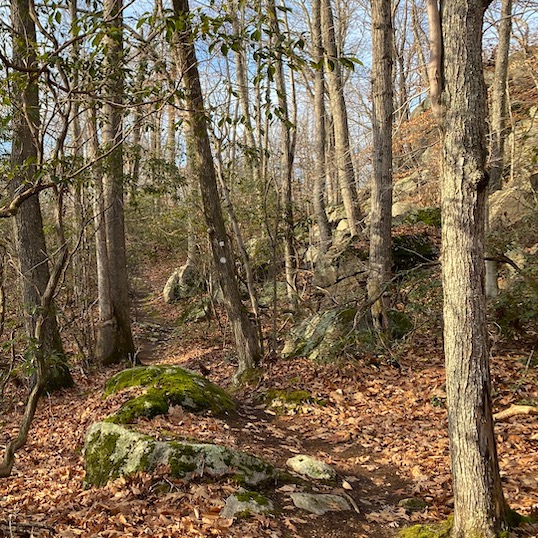
Since Guilford’s founding, the forested area, known today as Westwoods, has evolved to meet the needs of Guilford’s residents. Because of careful planning and tremendous community effort, Westwoods remains a natural place, just 1.5 miles from the Green, treasured by thousands of recreationalists annually.
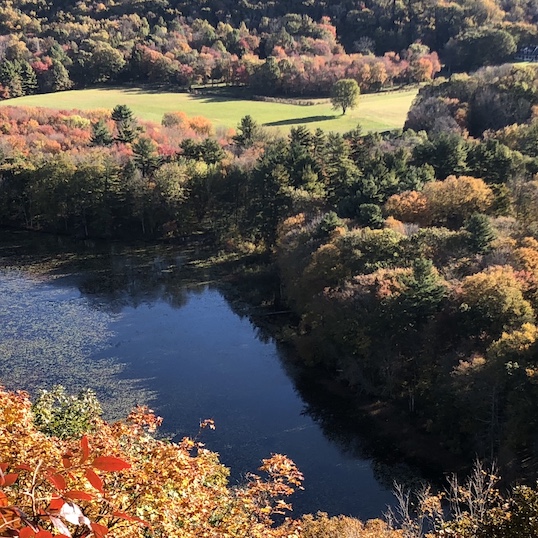
The forest and marshes in and around Westwoods were used by Guilford’s settlers as agricultural lands. Trees were cleared, stone walls were built, livestock were grazed, and where Lost Lake stands today, salt hay was harvested. The story of this forest is similar to that of many forests throughout Connecticut. As the demand for charcoal and firewood increased, Westwoods was further divided into smaller parcels to become wood lots. There was some quarrying at its center. Around the turn of the century, Stiles Brick Company of North Haven purchased large tracts of the forest to supply wood for its kilns. Around this same time, in the early 1920s, forester George Cromie, the first City Tree Director for New Haven and an advocate for municipal parks, had come to know and appreciate the Westwoods area. When Stiles Brick was ready to divest itself of its nearly 300 acres, Cromie purchased the land personally. After using it for forest planting experiments for several years, Cromie sold it to the State of Connecticut in 1928 for one dollar. This was the first of many generous acts that would make Westwoods the publicly accessible resource it is today. The State managed these new parcels together with properties in north Guilford and other towns as part of Cockaponset State Forest. In the 1960s, as a national interest in outdoor recreation and conservation exploded, Guilford followed suit. Under direction from a State law passed in 1961, Guilford established a Conservation Commission in 1963. The Commission had, as it does today, a broad charge to look after the natural resources of the Town. Then, in 1965, a group of conservation-minded Guilford residents, concerned about the filling of salt marshes, founded the Guilford Land Conservation Trust (GLCT) in order to permanently protect some of Guilford’s important natural resources. At the time, wetlands and watercourses did not have the legal protections they enjoy today. In the mid 1960’s, the Conservation Commission became interested in increasing public understanding of and concern for natural areas through the creation of walking trails. In 1965, the Commission, chaired by Anne Conover, reached out to the State of Connecticut for permission to create trails on the State Forest parcels in Guilford’s “West Woods.” At that time, Michael Pochan, a Guilford resident and GLCT volunteer was a Service Forester for the State and worked in the Westwoods holdings. The Conservation Commission hired a consultant from Durham, Richard Elliot, to lay out the trails. Pochan and Elliot studied the area and proposed including some areas owned by private individuals in the system. With permission from the necessary landowners in place, and countless hours of work by volunteers from the Conservation Commission and GLCT, 225 people attended the formal opening of the trails on September 18, 1966. The system included many of the trails used today.
More information about Westwoods and other properties maintained by the GLCT can be found in the Properties section of this web site.
If you would like to join or donate to the GLCT, you may do so on-line or by mail to:
Guilford Land Conservation Trust
P.O. Box 200
Guilford, CT 06437