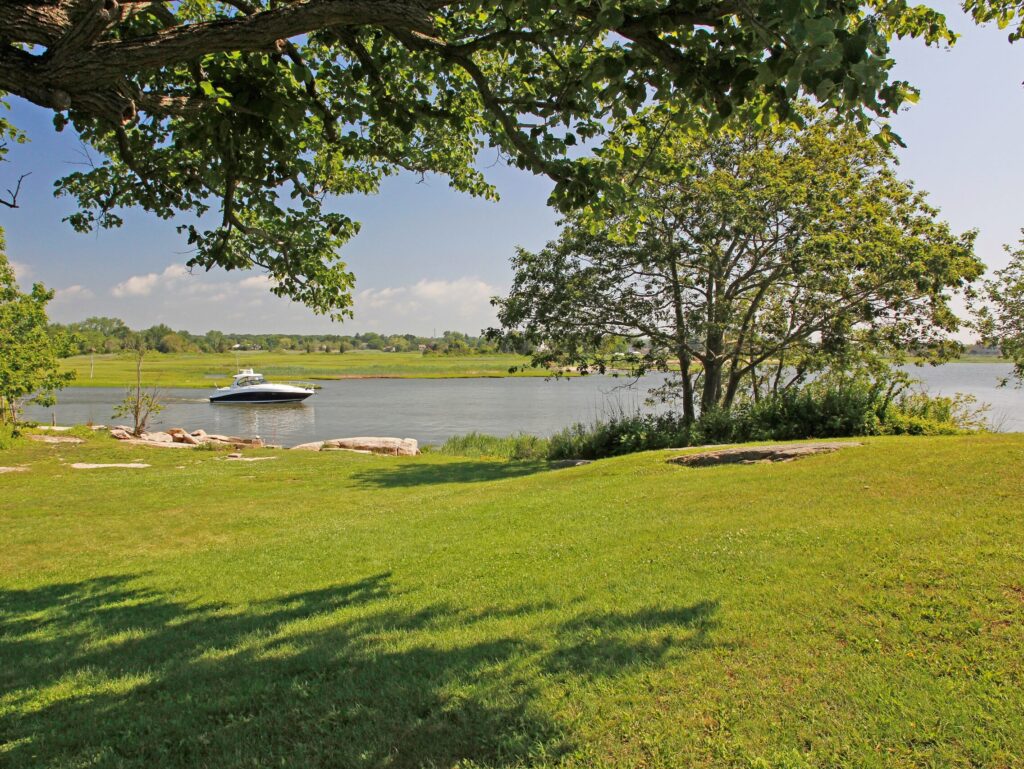
Thanks to the Guilford Courier and Wesley Bunnell for the profile of Olmsted Outlook. Work on the property continues, but it is now open to the public again.
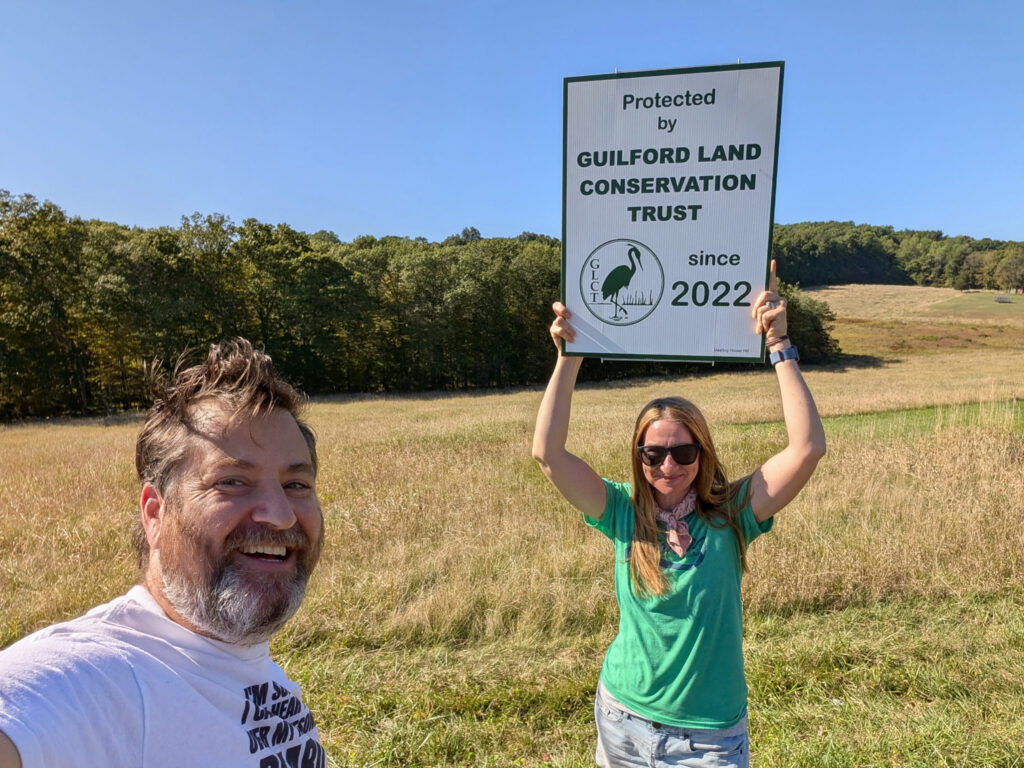
For our 60th, GLCT is highlighting some of our properties around town and labeling them with the date of acquisition. We have been Guilford neighbors since 1965 and, with your support, our commitment to this community has only grown stronger over time. Thank you! The project has been spearheaded by GLCT Director, Bernadette Bober, shown here with Director Ian Savage, […]
Donate and Become a Member GLCT has purchased a 33.5-acre property in Westwoods for $635,000. This unexpected opportunity is a fitting way to celebrate the organization’s 60th anniversary. In July 2025, GLCT got word that it would receive $412,750 in grant funding for the project from the State of Connecticut Open Space and Watershed Land Acquisition Grant Program. Founded in […]
Landscape architect Crystal Gaudio will identify invasive plant species common to Southern Connecticut and discuss best methods and timing for removing them. March 25, 2025 at 7 PM Guilford Free Library, 67 Park Street – register here
In early spring of 2025, GLCT closed on 3.08 acres next door to the Meeting House Hill property, across from Melissa Jones. This new purchase includes two smaller parcels that extend into the field already owned by GLCT. Now, in addition to the 26 acres of field and wet meadow. GLCT owns a thriving wetland fed by a spring and characterized […]
In November, GLCT purchased a 5-acre inholding for $95,919 from the estate of longtime Guilford resident Mary Sullivan. The property is located along the North Branford town line south of the former New Haven and Shoreline trolley. The Kampmeyer Preserve was established in 1994 when GLCT supporter Preston Kampmeyer bequeathed his house (and cat) to GLCT. We used the proceeds […]
Watch the video of this presentation (opens in a new tab). Guilford Land Conservation Trust and the Guilford Free Library present Tree Stressors in Connecticut. Elisabeth Ward, Ph.D. of the Connecticut Agricultural Experiment Station will discuss how Connecticut’s forests are changing in response to Beech Leaf Disease and Emerald Ash Borer invasion.
Over the coming months, our riverfront property on River Street at Broad Street will be closed for a major construction project to repair the seawall. The wall has held the West River back from the park for over 100 years. With the movement of a century’s worth of twice-daily tides combined with the increasingly heavy storms and flooding induced by […]
On June 11th, GLCT hosted Patrick J. Lynch as the speaker at the 2023 annual meeting. Known for his field guides, Lynch has won over 35 national and international awards for his medical illustration, publications, and software design. His presentation, What Does Sea Level Rise Look Like on a Familiar Shoreline, took attendees through an exploration of changes along Guilford’s shoreline […]
Join us at Bishop’s Little Red Barn for our annual meeting featuring Patrick J. Lynch. who will discuss, “What Does Sea Level Rise Look Like on a Familiar Shoreline?” Known for his field guides, Lynch has won over 35 national and international awards for his medical illustration, publications, and software design. Lynch will hold an illustrated talk followed by a […]
Join us on Wednesday, April 19th at 7:00 p.m. at the Nathaniel B. Greene Community Center for an overview of the upcoming changes to the trails in Westwoods and the connection between forests and climate change. Joseph Orefice, Lecturer and Director of Forest and Agriculture Operations at the Yale School of the Environment will be our guest presenter.
GLCT is thrilled to announce that we have completed the acquisition and met our fundraising goal for the purchase of the 25-acre field and wooded area on Great Hill Road across from the North Guilford churches and Melissa Jones School. We are so grateful for the many friends and neighbors, particularly the hundreds of individual Guilford donors who contributed have […]